
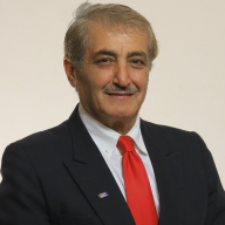
Dr. Ayman Soliman Mosallam
University of California, Irvine, US – ICCSTE 2027 Plenary Speaker
Mosallam’s research covers topics related to structural and earthquake engineering with a specialization in advanced composites and hybrid systems for infrastructure applications. In addition, he has been involved in several major research projects dealing with the development and verification of innovative seismic repair and rehabilitation systems for reinforced concrete, masonry, wood and steel structures. Based on the research works conducted by Mosallam and other researchers at UCI, two demonstration projects introducing the use of innovative composite systems were completed including the Sauvie Island Steel Bridge (Portland, Oregon) for the feather-weight sandwich composite strengthening technology and the Schuyler Heim Bridge (Long Beach, California) for the hybrid composite decking. Currently, Mosallam is involved in several funded research projects including the development of a Diagnostic/Prognostic System (DPS) for innovative repair and health monitoring of military composite bridges. The DPS system is being developed jointly by different organizations including Alpha Star Corps and the Boeing Company for the US Tank-automotive and Armaments Command (TACOM). The DPS protocol incorporates the latest technologies of optical fibers and remote sensing technologies. Funded by Ohio DOT through the Federal Highway Administration (FHWA) TEA-21 Program and with collaboration with University of Akron, a major research project is underway aiming at developing an innovative collisions protection system for highway bridges using remotely-monitored multilayered honeycomb system. Mosallam is the of the authors of the American Society of Civil Engineers (ASCE) Structural Design Manual for Composite Joints and the co-author of the ASCE Prestandard Documents for Pultruded Composites. He also serves on the Editorial Board of the Composites: Part B Journal and is the guest editor of its special issues on infrastructure applications.
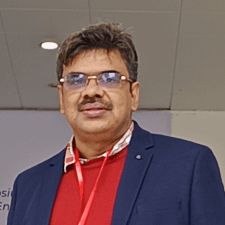
Dr. Pijush Samui
NIT Patna, India – ICCSTE 2027 Plenary Speaker
Pijush Samui is working as a professor in civil engineering department at NIT Patna, India. Dr. Samui has over 20 years of research, teaching, and consulting experience within the fields of application of AI in various engineering problems. His research expertise includes: (1) Liquefaction of soils, and Lateral spreading; (2) Reliability and risk analysis of structure; (3) Heath care system; (4) Disaster mitigation; and (5) site characterization.
Dr. Samui is the author of seven major AI books: (1) Handbook of Neural Computation, (2) Data Analytics in Biomedical Engineering and Healthcare, (3) Soft Computing in Geotechnical Engineering, (4) Handbook of Deep Learning Applications, (5) Big Data in Engineering Application, (6) Intelligent Data Analytics for Decision-Support Systems in Hazard Mitigation: Theory and Practice of Hazard Mitigation, and (7) Machine Learning and Iot Applications for Health Informatics. He developed a course on “Machine learning in Geotechnical Engineering” in ISSMGE Virtual University (http://virtualuniversity.issmge.org/courses/course-v1:ISSMGE+ML101+2020/about ).
Dr. Samui has received several awards for excellence in research and teaching, including IIT Roorkee Shamsher Prakash Research Award, IGS – Sardar Resham Singh Memorial Award, IACMAG Excellent Regional Contributions Award. He is a fellow of Indian Society of Earthquake Technology (ISET), Soft Computing Research Society(SCRC) and Indian Geotechnical Society(IGS). He is guest professor at University of Science and Technology, Beijing. He is also Title of Docent at Tamper University. He was Adjunct Professor at Ton Duc Thang University (Vietnam)(2018-2021). Dr. Samui is the author of seven major AI books: (1) Handbook of Neural Computation, (2) Data Analytics in Biomedical Engineering and Healthcare, (3) Soft Computing in Geotechnical Engineering, (4) Handbook of Deep Learning Applications, (5) Big Data in Engineering Application, (6) Intelligent Data Analytics for Decision-Support Systems in Hazard Mitigation: Theory and Practice of Hazard Mitigation, and (7) Machine Learning and Iot Applications for Health Informatics. He developed a course on “Machine learning in Geotechnical Engineering” in ISSMGE Virtual University (http://virtualuniversity.issmge.org/courses/course-v1:ISSMGE+ML101+2020/about ).
Dr. Samui has received several awards for excellence in research and teaching, including IIT Roorkee Shamsher Prakash Research Award, IGS – Sardar Resham Singh Memorial Award, IACMAG Excellent Regional Contributions Award. He is a fellow of Indian Society of Earthquake Technology (ISET), Soft Computing Research Society(SCRC) and Indian Geotechnical Society(IGS). He is guest professor at University of Science and Technology, Beijing. He is also Title of Docent at Tamper University. He was Adjunct Professor at Ton Duc Thang University (Vietnam)(2018-2021).
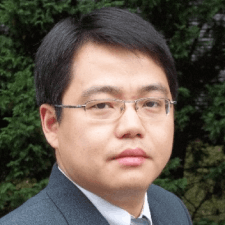
Dr. Hao Wang
Rutgers University, USA – ICCSTE 2027 Plenary Speaker
Hao Wang is a Professor at the Department of Civil and Environmental Engineering, Rutgers University, Piscataway, NJ, USA. He received his B.Sc. in Civil Engineering (2001) and M.Sc. in Transportation Engineering (2004) from Southeast University, an M.Sc. in Civil Engineering from Virginia Tech in 2006, and a Ph.D. in Civil Engineering from the University of Illinois at Urbana-Champaign in 2011. His research interests include vehicle–pavement–environment interaction, multi-scale and multi-physics modeling, sustainable infrastructure material and life-cycle assessment and analysis. He is a fellow of the Engineering Mechanics Institute (EMI) of ASCE and the recipient of the ASCE Huber Award in 2022.

Dr. Daniel Cusson
National Research Council, Canada – ICCSTE 2027 Keynote Speaker
Dr. Daniel Cusson, P.Eng., is a Principal Research Officer at the National Research Council Canada’s (NRC) Construction Research Centre, having joined the institution in 1994. He earned his Ph.D. in Civil Engineering (Structures) from Université de Sherbrooke in 1993, followed by a postdoctoral fellowship at Laboratoire central des ponts et chaussées (LCPC) in Paris, France. Dr. Cusson has dedicated his career to advancing the safety, durability, and resilience of critical civil engineering infrastructure. His research focuses on optimizing structural performance, de-risking novel assessment technologies, and supplementing traditional condition assessment methods with cutting-edge smart sensing solutions. In the past 12 years, his work has focused on space-borne remote sensing – specifically satellite-based interferometric synthetic aperture radar (InSAR) – to enable large-scale deformation monitoring, automated anomaly detection, and early-warning alert systems for highway and railway transportation networks. An internationally recognized authority in bridge condition assessment and structural health monitoring, Dr. Cusson has led major multi-partner national initiatives to validate advanced monitoring technologies across Canada. His scientific portfolio includes over 225 publications, featuring more than 100 refereed journal papers that have garnered over 4,600 citations, reflecting a sustained commitment to delivering impactful engineering solutions for safer, more resilient infrastructure worldwide.
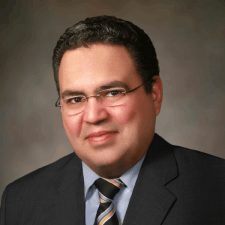
Dr. Maged A. Youssef
Western University, Canada – ICCSTE 2027 Keynote Speaker
Maged A. Youssef is Professor of Civil and Environmental Engineering at Western University in London, Canada,
and a licensed Professional Engineer in Ontario. He received his Ph.D. from McMaster University in 2000, and
practised as a structural engineer in Cairo and, subsequently, in New York City before joining Western in 2002.
His research addresses the resilience of concrete and steel structures to earthquakes and fire, and its translation
into products, design tools, and code provisions—most recently a mechanical rebar coupler filed under the
Patent Cooperation Treaty in 2025. He serves on four American Concrete Institute technical committees and on
the CSA S6 Fibre Reinforced Structures subcommittee, chairs the Canadian Society for Civil Engineering’s Multi-
Hazard and Structural Resilience Committee, and has published 88 articles in peer-reviewed journals.